
15 of Oscar V. Hunt's delivery trucks photographs have been added to the BPL Digital Collections database. Drive on in and check it out.
 Twenty-six additional photographs from the Jefferson County (AL) Board of Equalization were recently added to our BPL Digital Collections database. Images include businesses, churches, and schools in Birmingham.

 The Jefferson County (AL) Board of Equalization was responsible for photographing all structures within Jefferson County for the purpose of taxation. BPL's Archives Department is responsible for preserving 1500 boxes of the Board's files (including photographs) covering the years 1938-1977. Twenty of these photographs were recently added to our BPL Digital Collections database. Images include businesses, churches, and schools in Birmingham and Homewood.

Bicycles, known colloquially in the nineteenth century as “wheels,” offered a new kind of mobility that many women embraced. While some worried that having women riding about on bicycles would lead to moral decay, bicycle manufactures catered to the new clientele and Victorian era women found freedom on their bikes....(read more)
Newspaper Articles, Photograph and Postcard
(Part of Birmingham Magazine's monthly feature on Birmingham history highlighting items from the Archives’ collections)
 The Jefferson County (AL) Board of Equalization was responsible for photographing all structures within Jefferson County for the purpose of taxation. BPL's Archives Department is responsible for preserving 1500 boxes of the Board's files (including photographs) covering the years 1938-1977. Forty-nine of these photographs were recently added to our BPL Digital Collections database. Images include businesses, churches, and schools in downtown Birmingham, Center Point, and Ensley.
 Birmingham's Vintage Service Stations


 As automobiles became affordable and reliable in the early 20th century, many Americans ventured out on long vacation trips into areas of the country not served by rail. Finding few places to stay, early auto travelers often slept in their cars or camped in tents. Enterprising residents along highways rented camp spaces in their yards or rooms in their homes. Towns and cities opened green spaces for camping, and some provided amenities like toilets, showers, drinking water and fire wood. By the 1930s, tourist courts lined American highways. Offering the comfort and privacy of small one-room cabins, tourist courts were a significant step up from sleeping on the ground or in the back seat. More...

 See a detailed engraving of H. M. Caldwell and read his pamphlet History of the Elyton Land Company and Birmingham, Ala.

 H. M. Caldwell's book History of the Elyton Land Company and Birmingham, Ala. (1892) is now available online. The entire text is included and is searchable.

 Newspaper articles about the Sixteenth Street Baptist Church bombing investigation and trials are now available for viewing. To see all the photographs and newspaper articles about the bombing and the investigation click here.

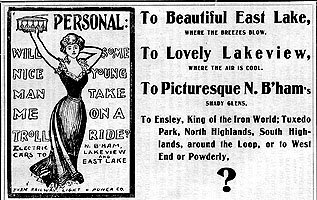 The streetcar brought tremendous changes to the everyday lives of Americans. Beginning in the late 1800s, the streetcar encouraged the growth of suburbs by allowing people to live miles from their work. The streetcar also opened new avenues for amusement that led to the development of Birmingham’s turn-of-the-century lake resorts. More...


